Wednesday, February 20, 2008

Text Set Beginnings

Why Mosquitoes Buzz in People's Ears
by Verna Aardema with pictures by Leo and Diane Dillon

For my text set, I want to begin with the book Why Mosquitoes Buzz in People's Ears. It is an African tale that deals with the consequences of lying among a group of animals in the forest. The illustrations in the story are striking and provide parallels to the feelings of the animals at different points of the story. I would love to use this story with my students to deal with lying. My students have no problem telling lies, even when a teacher sees them doing something wrong. I find this story very compelling with serious consequences to show them that their actions have real consequences.

Because the illustrations are so striking and original in this book, I would pick the National Museum of African Art in Washington, DC. I think that images and masks found at the museum could serve as an interesting comparison to the illustrations. Also, looking at how African artists use color to evoke emotion would strengthen the connection.


Self as the Informant

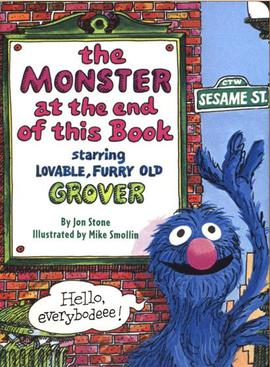
The first book I have specific memories of is The Monster at the End of this Book by Jon Stone. When I was about 3 years old, I had my mother read this story every night. The story is a cautionary tale where you are guided by the narrator, Grover. He instructs you on each page, to NOT turn the page because it will get you closer to the monster at the end of the book. He takes drastic measures to keep you from turning the page, including using bricks and mortar, and nailing boards to the page. I remember, even by the 50th time my mother had read this book, getting nervous each time we would turn the page and get a step closer to the monster. In the end, the monster is actually Grover, the lovable narrator who has been with you the whole time. My mother did a fabulous job engaging me in the book by reading with excitement and fear and also by talking to me after about confronting things that scare me because you never know what will happen.


Despite being and avid reader from the time I could pick up a book, it wasn't until I was 12 years old that I really became lost in a book. In sixth grade we were assigned Walk Two Moons by Sharon Creech. It is a complex story about a girl name Sal who is trying to come to grips with not only her mother's disappearance but also her new life and relationships in the place where she and her father have moved. As an adolescent, I remember being surprised and amazed at how the language and the world created by the author could have such a significant impact on the reader. While I had not experienced the hardships that Sal had in her life, I connected to the adolescent feeling of confusion and the need for answers.

Tuesday, February 12, 2008

Reflection Point 2.6

In the latter part of the chapter, you read about David and the work that he and his students did to take up the issues of classism and inequity. What they accomplished was a beginning. Reflect on some other strategies that David could have used to push his students' thinking further. For example, what other kinds of work could he have done to analyze advertisement fliers or television?

I think one thing that David could have done to push his students further would be to begin to analyze other companies in the same market. By having the students examine other companies such as Adidas or Reebok they could draw conclusions about whether the inequity they observed was found solely in Nike, or was more common to the sports/apparel industry. Depending on what they find out, their interests could take them elsewhere.

The students could also begin to examine other forms of everyday texts, such as commercials, and analyze what people were represented (or absent) in their marketing tools. Students could ask the questions, "Why do the commercials either represent males or females, not the two competing together? Are the sports they depict males and females playing different? If so, then why are women and men featured playing different sports?"

Finally, I think David could have pushed his students into more corrective action than boycotting. Perhaps they could produce a commercial that represents different groups of people (in sex, age and race) marketed and appealed to in an equal fashion. This project would be a more age appropriate parallel to the poster created by Jessica in Professor Vasquez's class, depicting equal genders for the Mountie poster. To address the social issue of child labor, students could even create a business plan for Nike that eliminates child labor. Perhaps the social concern of children could find a solution to free children in other nations from the burden of capitalism and outsourcing.

Wednesday, February 6, 2008

Wednesday, February 6th Post - What's Lacking in the Balanced Literacy Model

As a relatively inexperienced teacher, one of the few things I have felt confident in has been my knowledge about how to implement a program of balanced literacy in a first grade classroom. I did my research about phonemic awareness, phonics, vocabulary, comprehension and fluency instruction. This year I have even ramped up my instruction by including a variety of types of text experiences (read alouds, shared reading, independent reading book bins, decodable texts, math-literature connections). However, after a week of learning about critical literacy and what types of experiences that opens up to students, it is clear to me that I have not been empowering my students to engage in real ways. Perhaps I thought they were too young, or perhaps I was no confident in my ability to provide them with those opportunities, but it is clear my instruction is lacking.

When I was reading about the Halliday Plus Model (Vasquez, 12) I noted that my instruction really only targeted the "Learning Language" and "Learning about Language" quadrants, which rarely if ever including aspects of "Learning through Language" and "Learning to use Language to Critique" in my class. There is so much pressure from our schools that all children in first grade learn how to read - and for most people (myself included) - that triggers us to focus our time on the concrete chunks of reading (as defined by Reading First and other NCLB interventions). The danger is that in doing this we are not creating students who love to read as they continue in and beyond school.

I feel excited to learn how to integrate critical literacy into my current reading instruction. I have already seen glimpses of how my students are capable of engaging in texts - making connections to characters in books we read aloud or that they browse in the library. My one fear is that because my classroom lacks the rich diversity of Professor Vasquez's class, the students will not push each other to see people's perspectives. My role then becomes different, having to purposefully challenge them to research and learn about new cultures and peoples.